vineri, 20 aprilie 2012

Hacker Uploads More Alleged US Army Docs Obtained from CEIEC


China National Electronics Import-Export Corporation (CEIEC) has denied that its systems were breached. But the hacker known as Hardcore Charlie, a supporter of the Anonymous ideal, insisted that the data he gained access to was legitimate, so he made available another set of documents, totaling 400 megabytes.

“True we have discovered a Philippines campaign against china and vietnam -by gaining access to chinese corporate emails, well [expletive] them - the md5 hashes of sina.com are easy to bang. CEIEC you store your private stuff at sina.com adresses so do not fool people the more you deny the more we pwn you and we still do so kiss us where we [expletive] aight?(sic),” the hacker wrote.

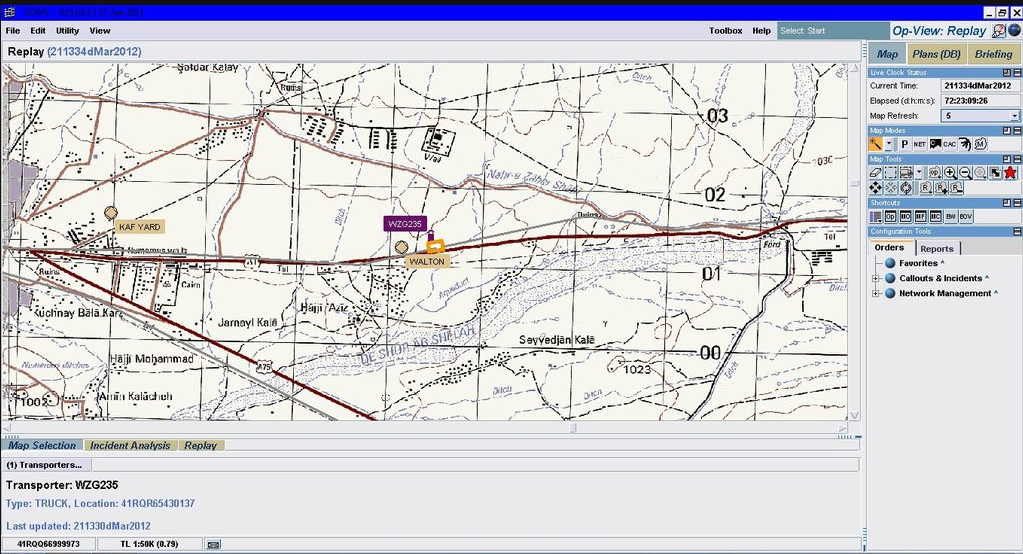
The hackers that participate in this project say they uncovered some documents related to Afghanistan, more precisely some US “cargo charts” received by China and forwarded to Ukraine.

They also say they possess US Military data, leaked from the email account of an employee of Vietnam’s oil company Petro Vietnam, that includes GPS information and documents.


At some point, the data dumps that allegedly came from the hacktivists were infected with malware, but they say that it wasn’t their “deed.”

The US Army is blamed for trying to shut them down to cover up its involvement in the scheme.

“They do not want us know about Military information about afghanistan cargos being traded to terrorists in Ukraine and Russia as payment for their services, behind this is the Wan Bao corporation trying to get stake in Ukraine and Russia copper mine deals. Its all about money folks and US gives no [expletive] since they are involved too you know,” they explained.

As we’ve said on a previous occasion, the legitimacy of the documents is hard to verify, but even if they are genuine, it seems that in this case the hacktivists didn’t cause too many waves with their findings.


softpedia.com

Hotel RAT Infects Front Desk PCs to Steal Credit Card Details


A remote access Trojan is being sold on underground forums to anyone willing to pay $280 (212 EUR) for it. For that price, the proud owner ends up with a malicious program that’s designed to steal credit card details from point of sale (POS) applications found in hotels.

Trusteer researchers found that the seller offers detailed instructions on how the Trojan works and how it can be installed. He even provides tips on how to social engineer the hotel employees in charge of the front desk to convince them to install it on the target computer.

Once the malicious element is installed, it steals credit card numbers and expiration dates by making screenshots of the POS application.

The worrying part about this spyware is that it’s not detected by antivirus software, which means that it can perform its malevolent duties without being identified easily.


Here’s how the seller advertises his merchandise:

Hello all, I’m offering Hotel RATs. In other words: A virtual skimmer.

Benefits of a Hotel (Remote Access Trojan Connection) is an infected front desk computers on which the hotel has its software that reads the number on the cc and spits out the information on the screen and it’s keyloggable if you keylog every stroke.

I’m offering this method for $280, guaranteed US/Canada/UK connections and a method on how to obtain them on your own. From showing you how to setup your RAT (which includes a free crypt – fully undetectable to all Antiviruses) along with selling you the tutorial on how to Social Engineer/Manipulate the front desk manager on the phone via VoIP.

I can prove my legitimacy and the accuracy of this method. PM me if you are interested.


Unfortunately, this proves that when it comes to your credit card, you cannot trust anyone. That is why credit card holders are advised to follow best security practices and always keep a close eye on their financial assets.


softpedia.com

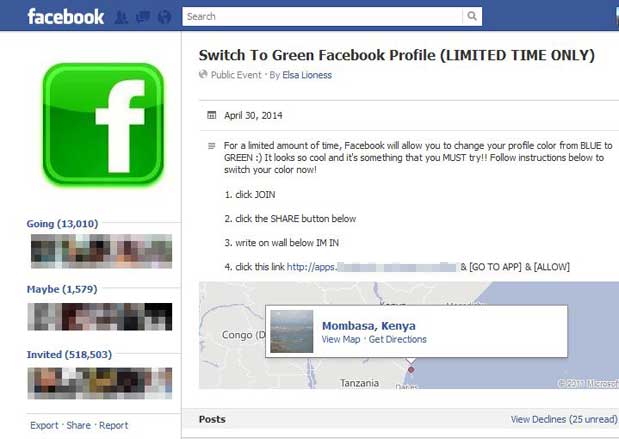
Beware of “Switch to Green Facebook Profile” Survey Scam


Scammers are not running out of ideas when it comes to promoting their malicious campaigns on Facebook. After they offered Timeline removal tools and pink profiles, now they promise users a feature that will make their Facebook account green.

According to Hoax Slayer, the shady “Switch to Green Facebook Profile” page gives detailed instructions on how the feature can be activated:

For a limited amount of time, Facebook will allow you to change your profile color from BLUE to GREEN :) It Looks so cools and it’s something that you MUST try!!! Follow the instructions bellow to switch your color now!


Facebook customers who comply with the demands and Share, and Comment on the shady page, are requested to click on a link that points to an app called Change2Green. This application can later be utilized by the crooks to make posts on the user’s behalf to promote this and other malicious scams.

However, that’s not all. After the app is allowed access to the profile, the victims are presented with a page that permits them to choose their location between the US and UK. Once that is done, a pop-up window informs that they are the lucky winners of a prize.

This is where the fraudsters start making bundles of money. First they ask the internaut to enter his/her mobile number in order to win an iPad. This is actually a subscription trap which signs up users to services that cost a lot.

In the next phase, a number of classic surveys are presented, each promising more fabulous prizes.

While no one gets them, or the green Facebook profile, the scam artists earn large sums each time someone completes a survey or enters a phone number.

Worryingly, this is not the only such scam that’s making the rounds on the social media network. We have also seen campaigns called Facebook Green, Get 1,000,000 People To Join And We Will Turn Facebook Green, Install Green F.A.C.E.B.O.O.K, and many others.


softpedia.com

joi, 19 aprilie 2012

I fell for the oldest social engineering trick in the book

I've written countless stories about social engineering, with security experts far and wide telling our readers never to open a link from someone we don't know. We've also published advice about making sure a message from a friend is for real before opening. That didn't stop me from falling for one of the oldest tricks in the book.
It came in as a direct message on Twitter Friday, from Network World writer Brandon Butler, who sits in the next cube over from me at the office. He's a nice, mild-mannered chap, so when I got a tweet in his name, I opened the link without thought. Well, that's actually not true. I did have thoughts --based on his tweet:
"Hello somebody is saying very bad rumors about you... (URL removed)"
I've been in this profession for a long time, and have found myself on the receiving end of blistering criticism plenty of times. It's a simple byproduct of the job. And yet I had to know who was spreading bad rumors about me. And I had to know right that second!
I clicked the link and got a slow-loading site that ended in a request for my Twitter username and password. Another huge red flag. But someone was out there spreading rumors about me, you see, and I had to know what it was. So I plugged in my credentials.
As the screen of my Android froze up, I got the sinking feeling that I had just committed an act of supreme dumbness. By then, it was too late.
Soon after that, a friend on Twitter sent me this message:
"Guessing you didn't mean to post that..."

It turns out the bad guys started using my Twitter account to send out a variety of spam messages to friends, including the one I fell for.
I changed all my passwords for everything, and the Twitter madness ceased.
This morning, Brandon came in and apologized profusely. It turns out he fell for the same trick as me, and the tweet I got from him was the result.
I laughed pretty hard over that. Sometimes, when you do something stupid, all you can do is laugh, fix what you've done and move on.
But Brandon hasn't been writing about security for the past eight years like me. I should know better by now.
Go ahead and have a good laugh at my expense. I deserve it.


csoonline.com

Bad stats sink cyber crime costs claims

Microsoft researchers find that estimates of damages caused by cyber crime are wildly inflated -- and increase the danger

If you follow computer security and have a good memory, you might remember a story from early 2009 that claimed cyber crime costs businesses as much as $1 trillion in just one year -- that's "trillion" with a "t." The version I saw was by Cnet writer Elinor Mills, whom I've always considered quite reliable. Somehow, her reporter's BS detector didn't go off, and she regurgitated that wild assertion by McAfee, a company that makes a living selling security products and services.
I had forgotten about that story until I came across a study by two Microsoft researchers who took the trouble to look hard at the facts behind the cyber crime scare stories, which persist to this day. Their paper, with the appealingly sensational title of "Sex, Lies and Cybercrime Surveys," is a rigorous debunking of the wildly inflated claims spread by security companies, law enforcement, and credulous journalists.
[ The newest security scaremongering has hit users of Mac OS X and confused IT managers of mobile devices. | Keep up with the key tech news and analysis with the InfoWorld Daily newsletter. ]
I don't mean to pick on McAfee or Mills, but as I've written more than once, neither IT nor the public benefit from security scare stories. Indeed, the more security companies cry wolf, the less likely it is that well-founded warnings will be heeded.

Consider how much money we're talking about when McAfee claims that cyber crime costs $1 trillion a year. The requested federal defense budget for the United States for fiscal year 2013 is just (!) $525.4 billion. The total profits derived from the global trade in illegal drugs were pegged at $600 billion by the International Monetary Fund in 2010.
Is cyber crime really a bigger source of revenue than the drug trade? Hard to believe.
Enter Dinei Florencio and Cormac Herley, the authors of the Microsoft study, who say, "One recent estimate placed annual direct consumer losses [from cyber crime] at $114 billion worldwide. It turns out, however, that such widely circulated cyber crime estimates are generated using absurdly bad statistical methods, making them wholly unreliable."
You'll notice that the figure they call wholly unreliable is just one-tenth the size of the McAfee assertion.
The researchers make the point that most estimates of damage are reached via surveys. Using surveys seems like a good strategy until you realize that researchers start with what appears to be a hard number provided by respondents, then extrapolate to a larger population: "Suppose we asked 5,000 people to report their cyber crime losses, which we will then extrapolate over a population of 200 million. Every dollar claimed gets multiplied by 40,000. A single individual who falsely claims $25,000 in losses adds a spurious $1 billion to the estimate. And because no one can claim negative losses, the error can't be canceled" through averaging, as happens somewhat when people choose from ranges.
They go on to say the cyber crime surveys they've examined "exhibit exactly this pattern of enormous, unverified outliers dominating the data. In some, 90 percent of the estimate appears to come from the answers of one or two individuals," Florencio and Herley state.
If you've ever done testing, you know it often makes sense to discard outliers in your results -- a practice you should've learned in introductory statistics classes. I have to assume that the people who conduct the self-servingly skewed surveys probably know it too, but choose not to bother. As we used to joke in our newsrooms: Never let facts spoil a good story.
How common is this upward bias in surveys? "Among dozens of surveys, from security vendors, industry analysts, and government agencies, we have not found one that appears free of this upward bias. As a result, we have very little idea of the [actual] size of cyber crime losses."
In case you're wondering why "sex" appears in the report title, it wasn't just to sensationalize the survey. Florencio and Herley liken the reporting of cyber crime to the reporting of the number of sexual partners claimed by survey respondents. "Cyber crime, like sexual behavior, defies large-scale direct observation and the estimates we have of it are derived almost exclusively from surveys," they say. And both topics lend themselves to exaggeration.
None of this is to suggest that cyber crime is not a problem. It is, of course. But the researchers note that in most cases, stolen passwords and other data are sold for pennies on the dollar, which is to say they're hard to monetize.
Even if they don't translate into the losses claimed by the self-interested security industry, there is a real price to be paid from the misuse of these surveys: Exaggerated stories of the size of profits dervived from cyber crime not only scare users unnecessarily, they fool novice hackers into to thinking they'll get rich quick. So they try.

infoworld.com


CISPA Effectively Addresses Threat of Cybercrime

Threats to our nation's cybersecurity are real and growing. Just like individuals, private companies and the marketplace are vulnerable to cybercrime. Tougher laws, smarter regulations, and improved information sharing will help protect U.S. national security and economic interests, but there is no single, simple solution that can make the problem go away. These threats are real, and in many respects, they represent the new front line in protecting America.
Legislating cybersecurity policies is not an easy task. A fine line runs between beneficial public/private information sharing and causing irreparable harm to vital U.S. commercial interests. The CEO members of the Business Roundtable, leaders of companies that are often the targets of cybercrime, believe that the Cyber Intelligence Sharing and Protection Act, known as CISPA, creates a framework for sharing of cybersecurity information between the government and the private sector in a manner that is effective but not overly intrusive.
[Read: Civil Liberties Organizations Launch Protests Against CISPA]
For example, the legislation authorizes the Director of National Intelligence to implement collaborative, real-time information sharing capabilities between the public and private sectors. The Business Roundtable believes this approach could lead to the integration of the full resources of the U.S. government, including defense, intelligence, homeland security, diplomatic, economic, and trade assets. At the same time, the legislation provides essential protections from disclosure of sensitive corporate information.
The solutions embodied in CISPA also address many of the information-sharing challenges that the Business Roundtable has identified in its recent policy paper, "Mission Critical: A Public-Private Strategy for Effective Cybersecurity." The paper presents a strategy to protect U.S. economic and national security from growing global cybersecurity threats through modern, flexible and collaborative approaches to protecting America's strategic information assets.

[Read the U.S. News debate: Should Congress Pass Anti-Online Piracy Legislation?]
By avoiding a top-down, bureaucratic, check-the-box approach to cybersecurity that cannot respond effectively to either the rapidly evolving threat environment or the reality of privately owned and operated information assets, CISPA represents the best, most flexible, and effective approach to developing a more robust and responsive cybersecurity infrastructure.
The Business Roundtable, an association of chief executive officers of leading U.S. companies with over $6 trillion in annual revenues and more than 14 million employees, believes CISPA is a very positive and important piece of legislation that should be approved by Congress this year.


usnews.com

Former FBI Cybercrime Top Cop Joins Startup That Targets The Attacker

Shawn Henry now heading up services arm of CrowdStrike, the semi-stealth startup that plans to more aggressively profile, target, and, ultimately, help unmask sophisticated cyberattackers
The toughest part about fighting cybercrime is actually catching the people behind the botnet, financial fraud, or cyberespionage. Just ask the former executive assistant director of the FBI's Criminal, Cyber, Response, and Services Branch, Shawn Henry, who late last month retired from the bureau after 24 years and today announced that he has joined startup CrowdStrike to continue the fight from the private sector.
Henry, the newly named president of CrowdStrike's Services division, says the static strategy of building a bigger wall isn't working against today's cybercriminals. CrowdStrike, which thus far has kept much of its strategy in stealth mode, is focusing on the bad actors behind targeted attacks, whether they are nation/state-sponsored hackers or financially motivated organized cybercriminals.
"If you profile the adversary and know what he's targeting, that allows you as the owner of the data to make strategic decisions on what to put on the network and how to store it. If you have a better understanding of them, that provides you with more granularity in your network defense and protecting your intellectual property," Henry says.
The ultimate goal is removing those bad actors. "From a law enforcement perspective, we have taken a couple hundred of those people out of play. Each was involved actively in breaching networks, and they are not doing that anymore," Henry says. "It's a multipronged approach: There needs to be defense, but for so long that's all we've been doing. There hasn't been any offense."

So what is a legitimate and legal offense by the private sector? "It's not just sitting back on your heels and trying to deflect the punches," Henry says. "It might be the way you move, it might be the sharing of intelligence with federal agencies or other companies. There are some deceptive tactics you can utilize that create challenges for the adversary. It's a whole host of things."
Henry says CrowdStrike's strategy is to help identify the bad guys and make it more expensive for them to operate. The company obviously won't cross any U.S. legal boundaries in their efforts, he says, and has no plans to hack the attackers.
[Financially driven cybercriminals are also using advanced persistent threat (APT) methods for longer staying power in order to increase their spoils. See APT-Type Attack A Moving Target. ]
CrowdStrike was co-founded by former McAfee executives George Kurtz, now president and CEO of the startup, and Dmitri Alperovitch, now CTO of CrowdStrike. Kurtz and Alperovitch first announced the company in February at the RSA Conference, where they demonstrated how advanced persistent threat (APT) attackers could use mobile devices to commit cyberespionage.
Alperovitch said he and Kurtz had become frustrated with the industry's continued approach of focusing on malware instead of the attacker -- the human behind the malware. "That's like looking at a gun or bullet as opposed to the shooter," he said in an interview during RSA. "We have an adversary problem, not a malware problem. The tools and exploits all change."
Big Data And Better 'Intell'
CrowdStrike is building technology to automate the discovery of attributes, behaviors, and techniques of attackers using "big data."
Henry says when he got the call from Kurtz after his retirement from the FBI in late March, he hadn't been looking for a new gig yet. "I have been talking for years as an agent about the need for the private sector to move into that space and to help companies become more secure. [CrowdStrike] was intriguing to me," he says.
He says he thinks his expertise and insight from the law enforcement side can help. "What I'm aware of and have learned I'll be bringing to them, specifically [from] the past five years, and not breaching any classified information," he says.
Gathering more intelligence on an attack is the new mantra within the security industry, especially given the more fatalistic perspective growing among security experts, vendors such as CrowdStrike, and businesses that the bad guys are likely already inside. So you need to know more about what they're trying to do to minimize the damage.
"There is certainly a trend forming around understanding the threat, its methods and techniques, its preferences and limitations, and its vulnerabilities of choice that they like to exploit: They are also human after all," says Jacques Remi Francoeur, founder and executive director of the Union of Concerned Cybersecurity Leaders. "Then you dynamically align your security measures toward the anticipated or more likely points and methods of attack."
But catching the bad guys isn't as simple as it sounds, he says. "Who is the customer for that? That is law enforcement's responsibility. Also, even if you put one behind bars, there are 10 [more] to take their place," Francoeur says. "It seems like we are headed down the same path as the measures against the drug trade. Billions spent with virtually no impact [on] the trade. However, without a deterrence, the problem would become rapidly much larger."
CrowdStrike's Henry says he envisions the approach taken by CrowdStrike will help catch some actual botmasters, cybercriminals, and cyberespionage actors. "I think we have to push the envelope a bit, but absolutely stay within the borders of the law," he says. "There's more we're able to do, and we will work with our attorneys" to ensure it's handled properly, he says.
Henry will oversee CrowdStrike's initial offerings, which include incident response services, enterprise adversary and malware assessment, and response and recovery.

By Kelly Jackson Higgins
Dark Reading 
5,000 Malicious Android Apps Identified in Q1, 2012


Trend Micro released its quarterly report for the first part of 2012 and it turns out that this year cybercriminals have focused their efforts mostly on schemes that target mobile device owners, particularly Android users.

While 2011 was considered the year of the hacktivists, 2012 may be the year of mobile malware. At the end of last year, many security experts said that mobile threats would increase in 2012 and those predictions seem to be coming true.

Trend Micro has already identified 5,000 malicious Android apps, one-click billing fraud schemes and fake applications that hide malicious elements being the most prevalent.

“One big reason for the popularity of apps is their ease of use. Browsing the net on your mobile phone is not the same experience as doing it on a laptop. The key thing to remember is to think before you give an app access to your data. If you have any doubts about giving oversensitive information, just don’t do it,” Senior Threat Researcher Robert McArdle said.


Advanced persistent threats (APTs) have also left their mark on the first quarter. In these types of attacks, cybercriminals take their time to go deep into the targeted network and cause damage.

Two campaigns stood out: the LuckyCat campaign, active since June 2011, and the LURID/Enfal campaign which relied on emails mostly related to the topic of Tibet.

Hoaxes and scams that circulate via email and social networking sites can’t be neglected. The large number of individuals that utilize Facebook, Twitter, and more recently, Pinterest, are all tempting targets for scammers and cybercrooks that use the data from social media sites to launch social engineering attacks.

Vulnerabilities that expose computing systems are also worth mentioning, one of the more significant ones being the flaw in the Remote Desktop Protocol used by Windows systems.

When it comes to pieces of malware, ransomware occupies a leading position, the countries most affected by the phenomenon being US, Germany, France, Italy, Russia, Taiwan, Australia and Hungary.


softpedia.com

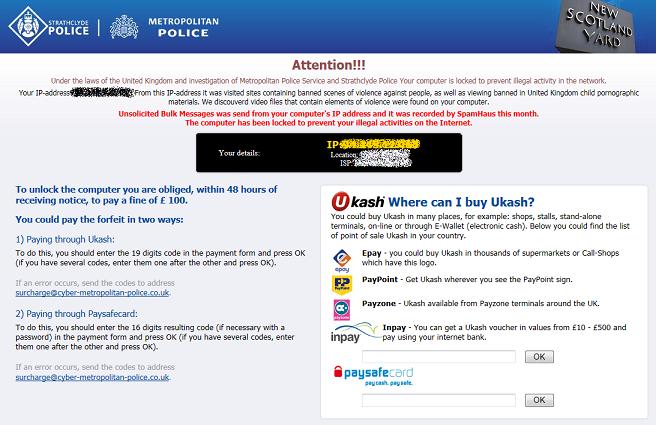
Ransomware Uses Reveton to Phish Ukash and Paysafecard Credentials


Experts from Microsoft’s Malware Protection Center (MMPC) warn users to be on the lookout for schemes that rely on ransomware to steal login credentials for online payment services such as Ukash and Paysafecard.

Similar to previously seen ransomware schemes, the victims’ computers become locked, displaying a screen that accuses users, on behalf of law enforcement agencies, of accessing illegal content.

In order to unlock the device, the unsuspecting internaut is requested to pay a so-called fine via Ukash or Paysafecard.

When the user clicks on the link associated with the payment method he chooses, he/she is taken to a site that’s cleverly designed to phish account credentials, and send them back to a remote server in Russia.


Microsoft identifies the pieces of malware that fuel this scheme as Trojan:HTML/Ransom.A and Trojan:Win32/Reveton.A.

As always, there’s no guarantee that once the fine is paid the cybercriminals that run the operation will take their time to unlock the computer. And even if they do unlock it, it’s not recommended that you comply with their demands.

To protect your device against such threats, make sure that you have an up-to-date antivirus solution running in the background. Also, be careful which sites you visit and what links you click on while surfing the web.

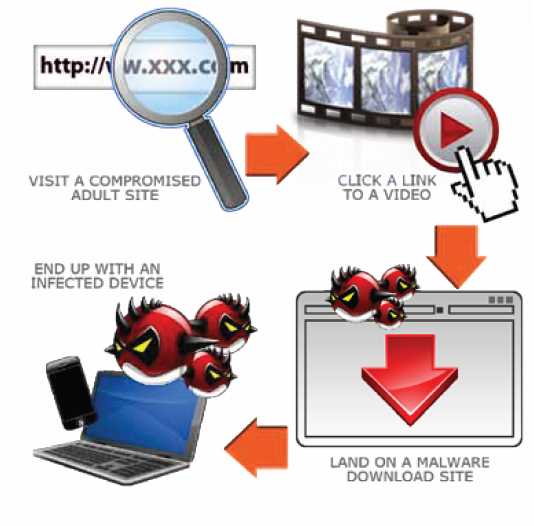
In a large number of cases, these malicious elements are served via adult sites. That way, when the ransomware steps into play and accuses the user of accessing illegal adult content, everything seems more realistic.

If you are a victim of such schemes, try to run a full system scan from the operating system’s safe mode. If that doesn’t do the trick, try using a rescue disk provided by security solutions providers to get rid of the nasty infection.

If you must, hire a professional, but never pay the crooks for the system to be unlocked.


softpedia.com

Russian Brokerage Account Hacker Charged by FBI


A 31-year-old Russian has been charged by US authorities on suspicion of running a scheme that involved breaching retail brokerage accounts and sham trades. The illegal activities caused damages of around $1 million (700,000 EUR).

Petr Murmylyuk, also known as Dmitry Tokar, from New York, demonstrated that hacking and securities fraud go well together.

According to the FBI, starting in late 2010, the suspect collaborated with others to hack into and steal from online trading accounts, causing losses to brokerage firms such as E*Trade, Fidelity, Scottrade and others.

Because online trading accounts have alarm mechanisms that notify their owners in case unauthorized transactions are detected, Murmylyuk and his accomplices changed the associated phone numbers and email addresses.


That way, each time an alarm would go off, the account owner would be unaware of the illegal activities that took place.

Once the crooks gained access to the accounts, they would open other ones at brokerage houses by relying on the stolen identities. They would use these so-called “profit accounts” to purchase contracts from the victims’ accounts and then resell them for up to nine times the initial sales price.

The profits would be deposited in bank accounts owned by foreign recruits that were visiting, studying or living in the US. These accomplices have already been convicted of conspiracy to commit wire fraud.

At the time of his arrest, back in November 2011, Murmylyuk was in the possession of a laptop that contained evidence of the illegal activities he performed. If found guilty, the suspect could be sentenced to a maximum of 5 years in prison, and be forced to pay a $250,000 (187,000 EUR) fine.

“Hackers continue to find new and advanced ways to steal from the financial sector. Through the illusion of legitimacy, these alleged hackers controlled both sides of securities transactions to game the market and drain their victims’ accounts,” said First Assistant U.S. Attorney J. Gilmore Childers.

“Those who use their computer skills for fraud underestimate the combined resolve of law enforcement and the financial services industry to detect and stop these crimes.”


softpedia.com

Most UK Organizations Unable to Identify Data Breach Victims in 24 Hours


A recent study ordered by LogRythm, a company that offers cyber threat defense, detection and response services, reveals that 87% of organizations from the UK would be unable to identify individuals that have fallen victims to a data breach as requested by EU regulations.

The new European Commission Data Protection Directive rules state that a firm that falls victim to a data breach must be able to identify the individuals affected by it in a matter of 24 hours.

According to the research that surveyed 200 IT managers from large British companies, most of them do not have the necessary policies and mechanisms that would help them achieve this feat. Furthermore, 13% of the respondents admitted that it would take them up to a month to determine exactly what type of customer data has been affected.


Another 6% of the decision-makers said that they didn’t think they could ever accurately identify the victims of a data breach that targeted their companies.

Other figures show that more than a quarter of the organizations from the UK don’t even know if they’ve suffered a data breach in the past. Also, half of the questioned managers stated that data was analyzed only in case of a breach, around the same number admitting that their budgets allocated for cybersecurity haven’t increased in the past 5 years.

However, there’s one thing that appears to motivate a large number of companies to take more active measures: penalties.

“It is worrying that so many organisations’ IT security decisions seem to be motivated by non-compliance and the threat of financial penalties, rather than a desire to employ a best practice approach,” Ross Brewer, vice president and managing director for international markets at LogRhythm, said.

“Unfortunately it appears that these attitudes stem from the top as 50 percent of respondents stated that new regulations are one of the main ways of engaging senior level staff with the IT security decision making process.“


softpedia.com

Check Point Launches ThreatCloud and GAiA Secure OS


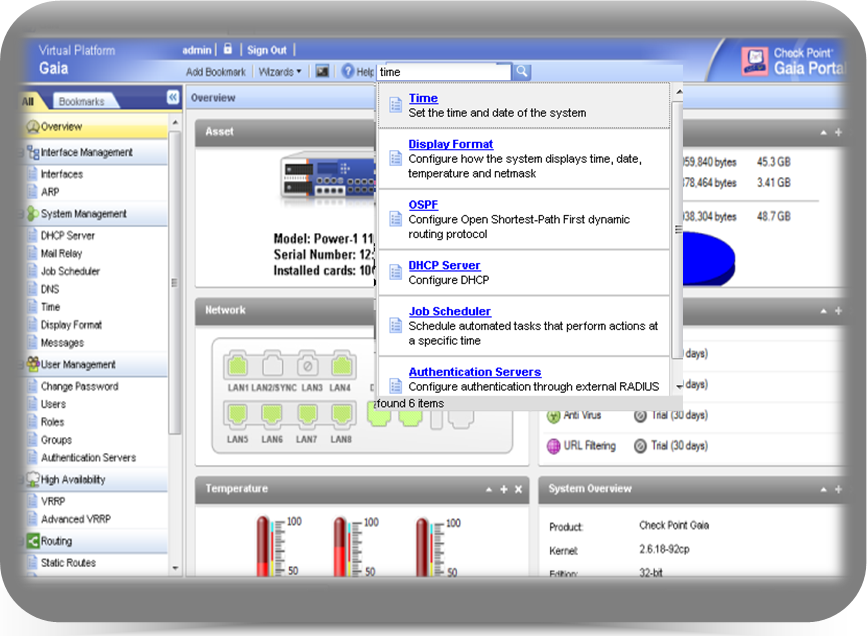
Check Point revealed the availability of GAiA, a unified secure operating system, and ThreatCloud, considered to be the first collaborative network purposed to aid organizations in the fight against cybercrime.

With the release of its Software Blade Architecture, R75.40, the company introduces a 64 bit operating system that’s designed to offer more than 100 new security features.

The firm already has a couple of operating systems on the market, the IPSO, for IP Appliances, and SPLAT, for Power-1, UTM-1, IAS and 2012 Appliances. However, the new Check Point GAiA is a unified operating system, with an easy-to-use web-based interface, that can be utilized for appliances, open servers, and virtualized gateways.


“To fight sophisticated, multi-vector attacks, deploying multiple standalone solutions is not sufficient. In the wake of emerging threats and new solutions, it has become critical for customers to keep security infrastructure integrated and simple,” revealed Gil Shwed, founder, chairman and CEO at Check Point Software Technologies.

“With a 64-bit OS and a variety of cutting-edge features, GAiA enables customers to align multiple layers of security protection on a unified platform and create an integrated security blueprint.”

ThreatCloud, the cybercrime-fighting network, is also integrated into R75.40 and it provides not only security intelligence, but also real-time protection against pieces of malware and other types of threats usually leveraged by criminals that operate in the virtual reality.

Basically, the ThreatCloud allows companies to exchange threat-related information. If one company is attacked, all the others that use the service will be automatically protected within seconds.

“With new forms of malware being generated on a daily basis, ThreatCloud expands an organization’s security footprint, bringing customers significantly more information and analysis about attacks than they would have otherwise had before,” said Dorit Dor, vice president of products at Check Point Software Technologies.

The R75.40 is free for existing customers, individual software blades being priced starting at $1,500 (1,140 EUR).


softpedia.com

Oracle Fixes 88 Bugs with April 2012 Critical Patch Update


Oracle is urging customers to apply the April 2012 Critical Patch Update (CPU), which addresses a number of 88 security holes that affect several products.

The affected pieces of software include versions of Oracle Database, Oracle Application Server, Oracle BI Publisher, Oracle DB UM Connector for Oracle Identity Manager, Oracle Identity Manager, Oracle JDeveloper, Oracle JRockit, Oracle PeopleSoft Enterprise, Enterprise Manager Grid Control, and even Oracle MySQL Server.

Three of the vulnerabilities that affect components from the Oracle Database Server suite could be exploited remotely even if the attacker doesn’t possess authentication credentials.

The CPU contains 11 fixes for Oracle Fusion Middleware products, 9 of which can also be leveraged remotely and without the need of a username and a password.


A number of 6 vulnerabilities are addressed in Oracle Enterprise Manager Grid Control products and 4 security holes in the Oracle E-Business Suite. All of the 4 flaws that affect the latter can be remotely exploited.

Fortunately, none of the weaknesses present in Oracle MySQL software can be used remotely and without authentication.

While they’re not recommended as long-term solutions, companies which for diverse reasons cannot apply the CPU fixes, can rely on a number of workarounds. To reduce the risk of successful cybercriminal operations, Oracle customers are advised to block the network protocols that may be used in attacks.

Also, the removal of rights from users who don’t necessarily require them is a good way of preventing attacks that need certain privileges.

As for the individuals that reported the vulnerabilities to Oracle, the list mentions Alexander Kornbrust from Red Database Security, and Andrea Micalizzi collaborating with TippingPoint's Zero Day Initiative.

TippingPoint DVLabs’ Brian Gorenc, Peter Maklary of LYNX, Shrikant Antre and Sunil Yadav from Network Intelligence, Sow Ching Shiong, who reported his findings through Secunia, and many others have also been credited.


softpedia.com